CLIMATE CHANGE IS SEXIST 2.0: Second edition of our call to action
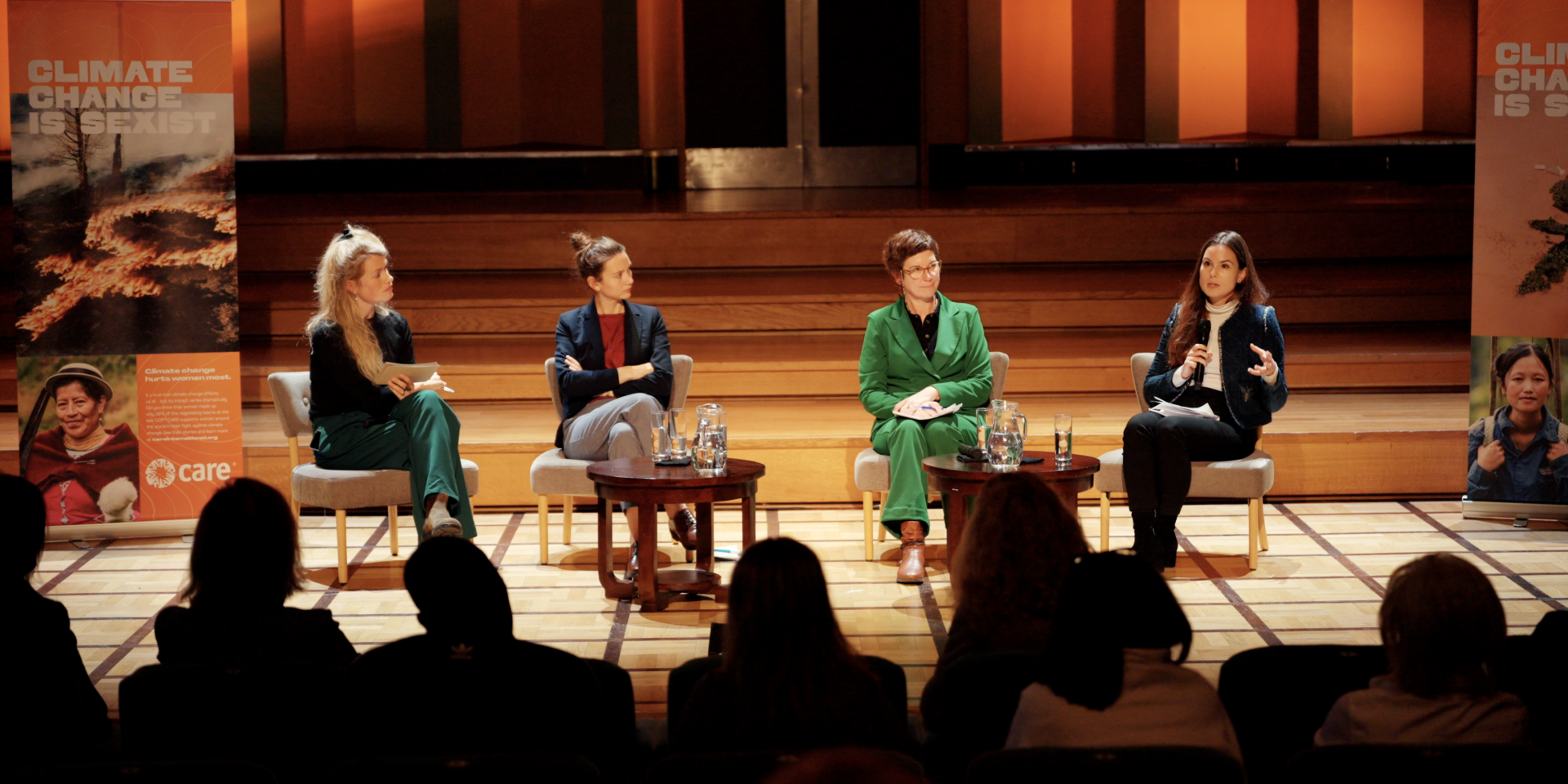
On November 25, 2025, CARE Belgium reiterated its call to action for climate and women's rights during the second edition of its advocacy event “CLIMATE CHANGE IS SEXIST 2.0,” highlighting the impact of climate change on gender inequality. This new edition was once again held at Flagey in Brussels on the occasion of the International Day for the Elimination of Violence Against Women and echoed the debates at COP30.
As climate change continues to exacerbate global inequalities and women's rights suffer a real backlash, this advocacy event reiterated the importance of giving women a voice and a platform in order to combat the impact of climate change in a sustainable and inclusive manner.
The conference, moderated by journalist Lizan Nijkrake, specialized in human rights, brought together policymakers, activists, eco-feminist activists, international organizations and civil society representatives to highlight how climate change exacerbates gender inequalities, while promoting women's leadership in the fight for resilience and climate justice.
The panelists were Princess Esmeralda of Belgium, journalist, filmmaker, climate and human rights activist and honorary president of CARE Belgium; Marie Lecocq, co-president of Ecolo; Els Lecoutere, senior researcher at the CGIAR GENDER Impact Platform and lead of the HER+ gender equality initiative; Karolina Wilberg, policy officer at the European Commission, DG ECHO; Zakia Khattabi, member of parliament and former federal minister of the environment; Chiara Armeni, professor of environmental law (ULB); and Caroline Nieberding, professor of terrestrial ecology (UCLouvain & BEE Lab), discussed the disproportionate impacts of climate change on women, particularly in countries in the Global South, and the importance of including them in climate initiatives for more effective, equitable, and sustainable solutions.
Why is climate change sexist? The answer from our panelists:
-
Els Lecoutere, Senior Researcher CGIAR Gender Equality and Inclusion Accelerator