Engendering Data Blog Post
Engendering Data Blog Post
Dignified work for youth: applying an intersectional lens to in Northern Nigeria
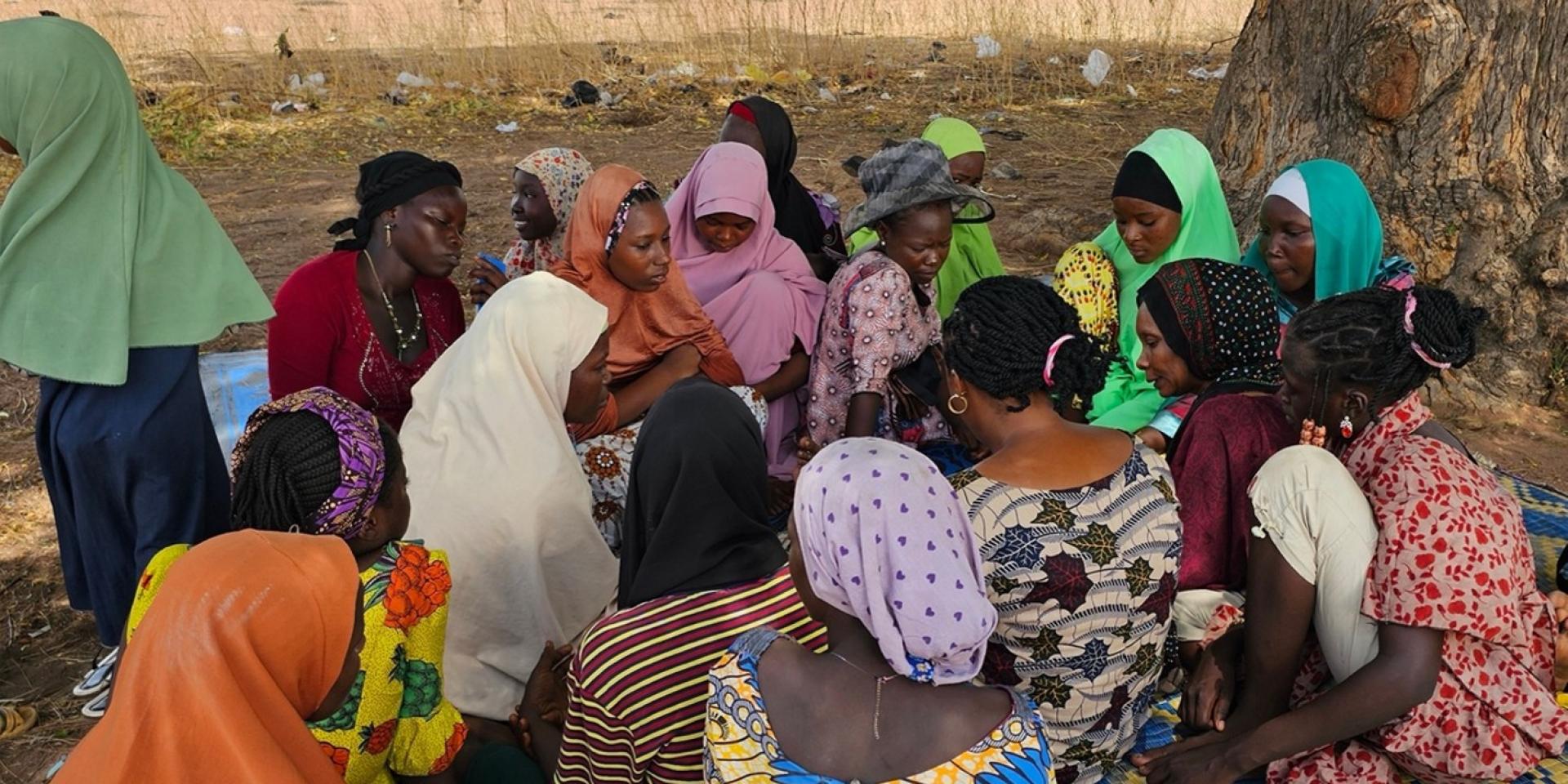
Dignified work is central to inclusion, because employment provides not only income, but also respect, safety, autonomy and social recognition. It determines whether young people view agriculture as a viable and desirable career path, directly impacting their willingness to engage in and transform agrifood systems.
Unlocking opportunities for young women and young men in agrifood systems requires addressing barriers shaped by gender, age, other social markers and experiences such as conflict and displacement.
Intersectionality is a framework that examines how multiple social identities—such as gender, age, economic status and displacement—interact to shape access to resources, opportunities and power within communities. Applying an intersectional lens on youth inclusion in agrifood systems is essential for enhancing food security, boosting rural economies and creating pathways to sustainable livelihoods.
Using our study on dignified and fulfilling work in agrifood systems in Northern Nigeria, we illustrate how we applied an intersectional lens to studying youth livelihoods.
Our study focused on understanding opportunities for youth in agricultural processing and marketing. Intersectionality guided this work at several stages, from developing data collection tools to designing the sample size and composition, and directing the analysis, ensuring we captured the complexity of intersecting identities. In our study, we define youth as people aged 15–35 years, in line with the African Union’s definition.
Developing intersectional data collection tools
We developed a series of qualitative tools to understand the barriers youth face in agrifood systems. While our emphasis was on youth experiences, we used a holistic perspective that included perspectives from a variety of value-chain actors. We conducted interviews and focus group discussions with youth and more mature adults, to strengthen our intersectional approach and help ensure that our analysis captured both shared and contrasting realities. Data collection included:
- nine community profiles in conversation with community leaders, where we mapped local infrastructure, livelihoods and youth programs to understand the local context
- semi-structured interviews with 30 young women and 31 young men actively involved in processing or marketing agricultural commodities, exploring personal experiences and perceived facilitators and barriers
- focus group discussions; 28 with young women and 23 with young men at different nodes of various agricultural value chains, providing a platform for collective narratives and illuminating shared challenges such as restrictive gender norms, economic constraints and aspirations for dignified work
- key informant interviews with 4 financial service providers, 18 value-chain actors and 5 program implementers, that added sector-wide perspectives on youth participation, service gaps and opportunities for more inclusive programming.
Addressing intersectional dynamics during fieldwork
Intersectional dynamics were also considered during fieldwork to ensure that we could capture diverse youth experiences throughout the data-collection process.
- Gender and access: Access to respondents was heavily affected by gender norms. One way we addressed this issue was by using women interviewers speak with young women participants privately to foster openness, which was necessary given social restrictions like kulle, the practice of female house seclusion, where married women’s movement outside the home is restricted. In contrast, young men had greater freedom to participate in interviews in public or semi-public spaces. These access patterns mirror the mobility constraints that shape young women’s participation in agricultural value chains.
- Conflict and identity: All study locations included youth who were internally displaced persons (IDPs), typically displaced by armed conflict in Northern Nigeria. We selected communities to interview based on security and accessibility, with priority given to locations where IDPs lived within host communities rather than in camps. This approach ensured that displaced youth were intentionally included in the study and that their experiences were captured alongside those of other young people.
- Power dynamics: During fieldwork, we observed firsthand how power dynamics silence certain voices. For instance, a young woman’s mother-in-law repeatedly interrupted to “correct” her responses. Our team navigated these moments tactfully, engaging the individuals who interrupted in conversation to distract them from the interview. This experience highlighted how age and marital status intersect with gender as young married women had the least autonomy in interviews.
Integrating intersectionality into the analysis
Intersectionality was also an important part of the analysis. We examined whose barriers are most severe, why they differ, and what strategies might address them.
Overall, our analysis revealed that dignified work encompasses profitability, social recognition, personal integrity and a sense of accomplishment. Our focus on intersectionality was key to understanding that the importance of each component varied by gender, age and displacement status. For young women who were not displaced, dignified work centered on profitability that enabled them to provide for their households and granted them financial independence. Moreover, young women’s work needed to align with gender norms —one young woman noted that trading in local markets, which are traditionally a male-only pursuit, could bring shame despite generating income. In contrast, young IDP women who had lost assets and security due to conflict valued income generation more than their non-IDP counterparts. One displaced woman in Kano explained how groundnut trading in the local market allowed her to support her children’s needs without having to rely on her husband, highlighting how market-based work was more socially acceptable for young IDP women, as community members recognized their heightened financial need.
Young men, conversely, valued profitability as being dignified work as it enhanced their ability to provide for their families, gain community respect and conform with a widespread gender norm that men should be providers. They too faced gendered constraints—selling certain foods like processed soyabeans was considered “less dignified” for men, because this agricultural product is seen as feminine. Across all groups, youth rejected physically demanding work (like manual farm labor or carrying heavy loads), socially demeaning activities (especially hawking for young women), and exploitative conditions. One displaced woman gave a harrowing account of being beaten while pregnant after demanding full wages.
These perspectives reveal that job creation efforts must go beyond income generation, addressing the safety, respect, fair compensation and social acceptance that make work truly dignified for diverse youth. For young women, specifically, restrictive gender norms—amplified by displacement—consistently undermine these dimensions and their autonomy.
Lessons for inclusive, youth- and gender-responsive research
This study provided key lessons on why it is important to integrate intersectionality into each stage of the research process. First, incorporating different groups into study samples, such as people living with disabilities, can deepen understanding of intersecting barriers. Second, applying intersectional thinking during data collection is important to account for how identities shape access, comfort and willingness to participate, and ensure that marginalized voices are heard and represented accurately. Third, using intersectionality as an analytic lens deepens understanding of how overlapping identities can shape experiences and adds richness to study findings. For CGIAR and partners advancing inclusive food systems, centering intersectional voices ensures programs truly resonate, driving sustainable change for young people.
Acknowledgements
This work was carried out under the CGIAR Gender Equality and Inclusion, and we are grateful for the support of CGIAR Trust Fund contributors: www.cgiar.org/funders. This research was supported by the Mastercard Foundation’s Strengthening Food Systems to Promote Increased Value Chain Employment Opportunities for Youth partnership (2022–2027). The views expressed in the study and this blog post do not necessarily represent those of the Foundation. We thank all participants and collaborators for their contributions.
Related content
Engendering Data Blog Post
Gender and data collection in fragile settings: challenges, risks and best practices
