Making the Invisible Visible: How AgWISE Is Redefining Gendered Water Insecurity in Coastal Bangladesh
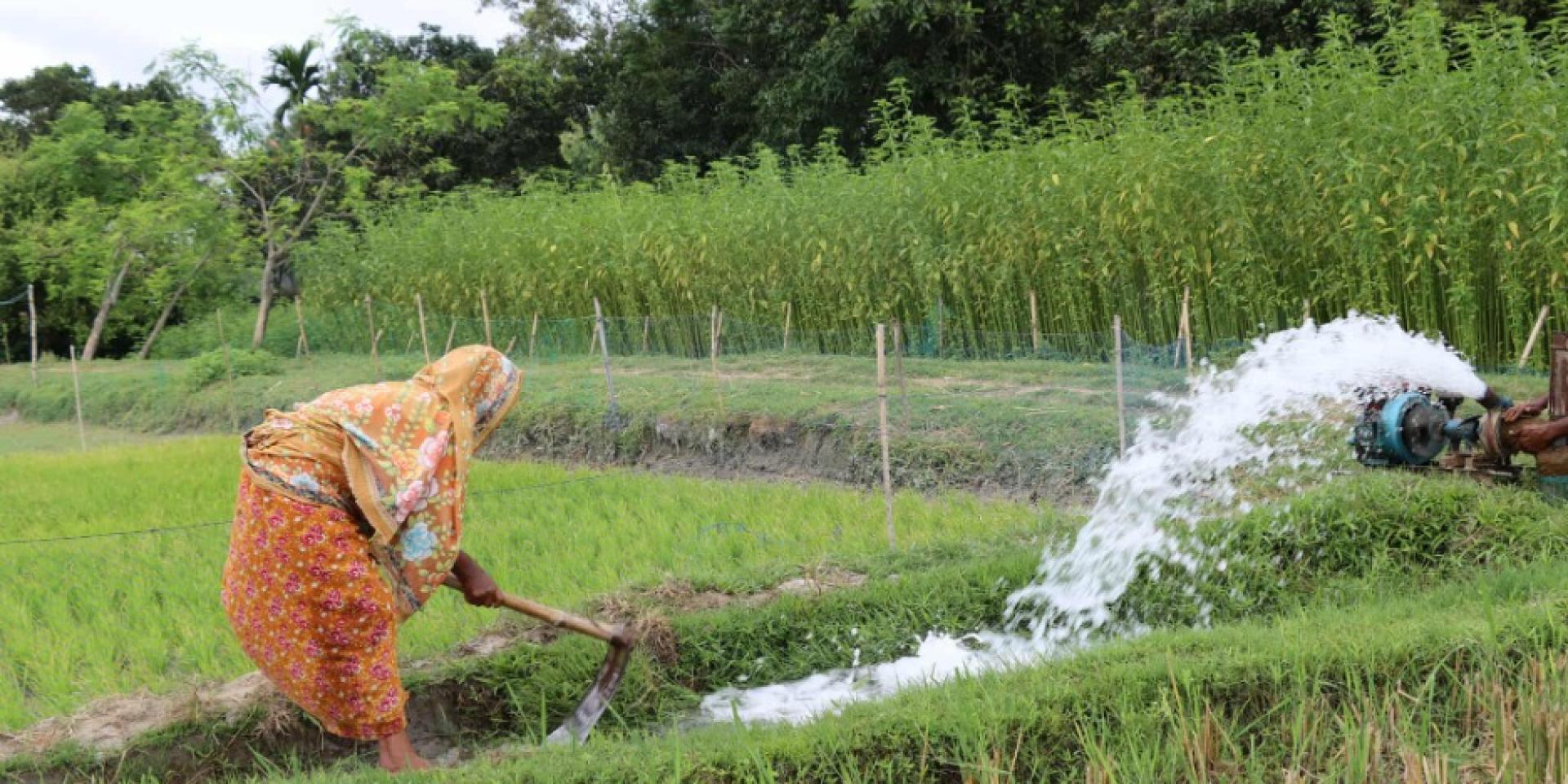
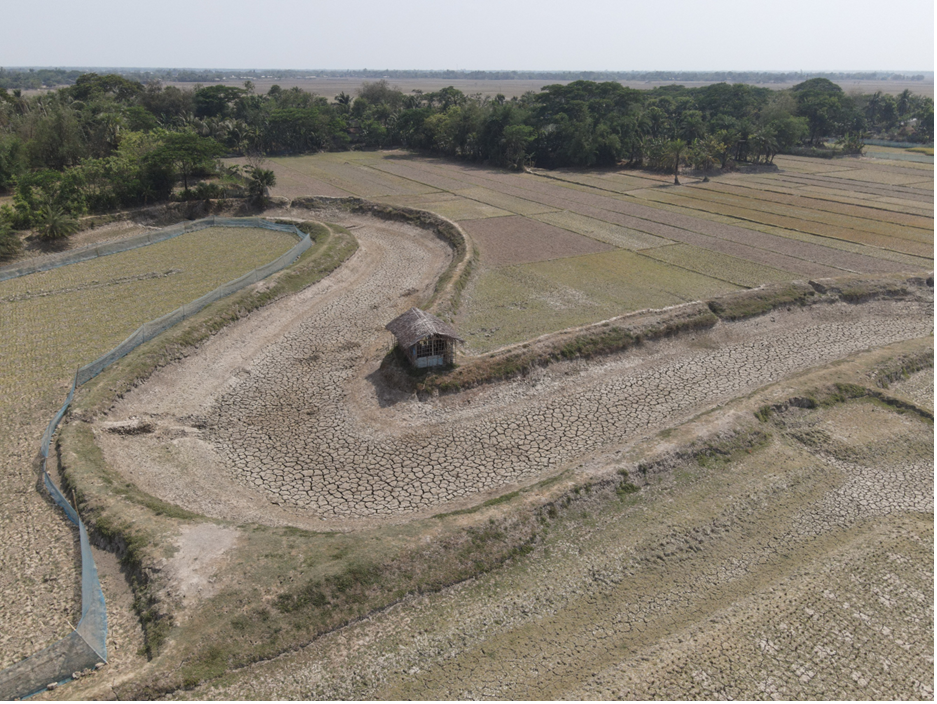
In Bangladesh’s southern coastal deltas, climate and other anthropogenic changes have resulted in the infamous declaration of the region as “a desert in the deltas”. Post-monsoon, starting as early as November, there is a severe freshwater crisis which escalates and intensifies drought-like situations until the start of the next monsoon cycle. During these months, water insecurity impacts crops, livestock, fishing as well as domestic/drinking water uses
Development literature is awash with stories and images of women walking long distances, queuing at crowded water points, and carrying large volumes of water back home. This has helped establish the narrative that women’s water burdens and challenges relate to women’s domestic work responsibilities which include access and use of water for drinking, cooking, cleaning, and caregiving. The design and application of the Agricultural Water InSecurity Experiences (AgWISE) tool provide evidence and help measure gendered water insecurity in climate-vulnerable agrifood systems. AgWISE makes women’s hidden water burdens visible. As our data shows women are primarily responsible for crop and vegetable irrigation, livestock, fishing increasingly in climate-impacted areas, where there are high rates of male-out migration taken on most agrifood-related tasks. Yet, infrastructure and the management and governance of water for productive use in Bangladesh remain largely masculine. Women pay a stiff price for this gender-blind assumption, which results in their exclusion from decisions that directly shape individual and household agricultural livelihoods, food security and nutrition.
Bangladesh: A Climate-Agriculture-Water-Gender Inequality Hotspot
Bangladesh, a deltaic country, is highly climate-vulnerable and frequently exposed to extreme weather events that increasingly destabilize agri-food systems, deepening vulnerability among the country’s smallholder and landless farmers, who make for more than 90% of the country’s farmers. Bangladesh is identified as a climate-agriculture-inequality hotspot in Asia. In the coastal delta, once the country’s rice granary, erratic rainfall, salinity intrusion and aquaculture expansion have severely disrupted freshwater flows.
These challenges are triggering male outmigration and leading to an increasing feminization of agrifood systems. Women have increasing agrifood-related responsibilities, but little say around water infrastructure and governance decision-making. In situations of an escalating freshwater crisis, decisions around water access and use are determined by powerful local elites, who are all men.
Introducing AgWISE: A Tool for Inclusive Measurement
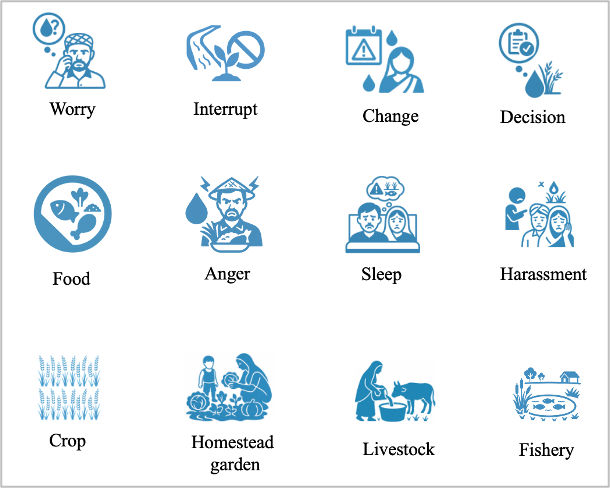
Agriculture Water InSecurity Experiences (AgWISE) builds on the global Household Water Insecurity Experiences (HWISE) scale. Our intervention was to extend its focus from domestic to productive dimensions of water insecurity. The tool was co-developed through a participatory process, field-tested and validated by farmers, socio-economic experts, and key institutional stakeholders. The AgWISE module includes the same twelve indicators used in HWISE that capture the material as well as the relational aspects of agricultural water insecurity.
In southern coastal Bangladesh-Khulna, 800 men and women responded to the HWISE survey as well as the newly co-developed AgWISE Module. Women and men were interviewed separately to assess intra-household differences. These surveys were followed by focus group discussions to validate findings and enable further reflections on the experiences of water insecurity.
Evidence Challenges Three Blind Spots
AgWISE data highlights three persistent blind spots in water governance and gender research:
Productive water is not just men’s domain. Results show that 74% of men and 58% of women experience agricultural water insecurity, disproving the notion that women only experience domestic/ drinking water challenges. Similarly, the HWISE module found that 43% of women and 29% of men reported difficulty accessing drinking water. These findings dismantle the binary view of domestic versus productive water insecurity as relating only to women versus men.
Embodied intersectional experiences of water insecurity. Data reveals that agricultural water insecurity disproportionately affects marginalized smallholders, low-income households, and those without ownership of land. Among women, the most affected are older women, female-headed, widowed or households where the women were abandoned by their husbands. Additionally, social norms on mobility impact Muslim women more than others, making it harder for them to access water for domestic and productive uses.
Psychosocial stress remains invisible in policy. Over 86% of men and 78% of women reported water-related emotional stress such as worry, frustration anger, anxiety and loss of sleep. While men tend to express their anger and frustration openly, women often suppress their emotional anxieties as social norms discourage women to be vocal and angry, and the everyday burdens of keeping home and performing domestic care work needs to go on for women, regardless of how they feel.
Turning Evidence into Empowerment to Decision
AgWISE’s contribution lies in how it can reshape conversations about productive water insecurity. Firstly, the data provides a comprehensive picture of who is affected, how, and why. This can enable policy-relevant interventions in water governance, agrifood systems planning, and gender-transformative climate adaptation. Secondly, the data enables moving beyond the physical, practical dimensions of water insecurity to assess and act on relational, psychosocial impacts of water insecurity experiences and outcomes.
A local facilitator noted during a validation workshop: “When we started asking about feelings and emotions and not just distance or hours - people realized how deeply water affects their peace of mind.”
Findings from AgWISE have been shared widely through dialogue forums at both national and local levels in Bangladesh. There is evidence of interest in and commitment to integrating gendered water metrics into water resources planning and monitoring systems. Currently under the Scaling for Impact Initiative, there are discussions to use these insights to inform gender responsive budgeting and outcomes. AgWISE is also being considered for integration into the gender-sensitive monitoring frameworks of agricultural extension services and community-based water management, and there is potential for the tool to guide adaptive irrigation schemes and water infrastructure planning for marginalized farmers, particularly for women.
Lessons for Gender-Responsive Research
Three key takeaways emerge from the AgWISE experience:
Domestic and productive water insecurity affects both women and men. Binary narratives around women and men’s water needs are a developmental myth, that needs correcting.
Water insecurity is a deeply embodied experience: Intersectional inequalities by gender, class, religion, age, and others shape water insecurity experiences.
Evidence of psychosocial impacts of water insecurity helps build solidarity and empathy in water dialogues and discussions: Data reflecting lived experiences becomes powerful tools for driving inclusive dialogue and policy action.
Looking Ahead: Scaling a Gender-Responsive Innovation
The success of AgWISE in Bangladesh demonstrates how co-designed tools can bridge the gap between ground realities and policy frameworks. At its core, AgWISE shows that what we measure determines what we value, and valuing women’s water experiences is a necessary step toward gender-equitable climate adaptation. As one-woman farmer reflected during a focus group: “When the canal dries, we don’t just lose water…we lose time, food, sleep, peace and life.”
Making such experiences count in data and policy, AgWISE can help ensure a human-centred climate adaptation strategy in Bangladesh.
We recommend integrating AgWISE insights into global monitoring frameworks such as UN-Water, FAO’s AQUASTAT, and through the Global Water Partnership to help establish evidence for more inclusive water security and climate resilient interventions and innovations. International development partners can also apply AgWISE metrics to guide investments that target the intersection of gender equality, water governance, and climate adaptation, ensuring that funding decisions reflect the realities of those most affected by water insecurity. By connecting local realities with global systems of accountability, AgWISE offers a foundation for transforming how water insecurity is understood, measured, and addressed worldwide.
Disclaimer: This story has not been reviewed by the CGIAR GENDER Equality and Inclusion Accelerator. The views expressed here are those of the author(s) and do not necessarily reflect the views of the Accelerator.