Watering change: How irrigation shapes women’s use of time in Ethiopia
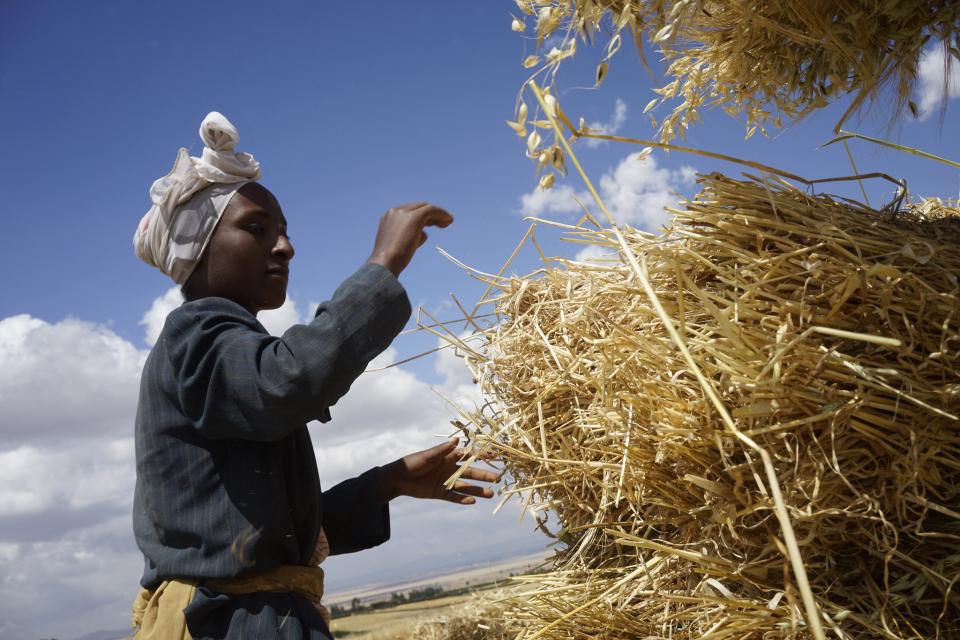
 Photo: ILRI / Camille Hanotte
Key messages
- Small-scale irrigation (SSI) can influence how women spend their time, with implications for their well-being and their ability to achieve their personal goals.
- SSI with motorized pumps is associated with reductions in the time spent on farming and personal care by women, as well as an increase in their leisure time. However, it may also reduce women’s control over some aspects, such as income, as men are more likely to take over irrigation activities.
- The potential effects from the introduction of agricultural technologies, such as SSI, on women’s time allocation should be carefully considered during the design and implementation of interventions to ensure labor-saving technologies support aspects of women’s empowerment.
Small-scale irrigation and the use of women’s time
Over the past two decades, small-scale irrigation (SSI) has expanded rapidly across parts of sub-Saharan Africa, gaining growing recognition as a potential pathway for increased agricultural production, higher household income, improved food security, dietary diversity and nutrition. Unlike large-scale irrigation systems like public dams or communal canals, SSI is typically owned and operated by smallholder farmers. Thus, SSI technologies enable rapid scaling without substantial public investment. The Ethiopian government has promoted SSI extensively, and evidence reveals that agricultural intensification through SSI enhances climate resilience, food security, and nutrition in Ethiopia.
Existing studies have hypothesized that motorized SSI technologies for irrigation, such as motor pumps, could reduce the labor burden of women and save considerable time on farming compared to manual SSI methods. This may enable women to engage in other activities or to reduce their time poverty.
To generate evidence on the relationship between SSI and women’s time allocation, we used two rounds of intrahousehold panel survey data from the Feed the Future Innovation Lab for Small-Scale Irrigation (ILSSI) in Ethiopia. The survey was conducted in four woredas (districts): Dangla and Bahir-Dar Zuria in the Amhara region; Lemo in the Southern Nations, Nationalities, and Peoples’ (SNNP) region; and Adami Tulu in the Oromia region. The data was collected in 2014 and 2017 and consist of the Women’s Empowerment in Agriculture Index (WEAI), including the WEAI time-use module. The final analytical sample included 338 households from each survey round.
Using econometric models, we analyzed how household use of SSI is associated with women’s time allocation across five different activities: off-farm employment, farming, household work, personal care, and leisure. We also assessed how different types of irrigation methods (manual, gravity, and motorized) affect women’s time allocation. Qualitative data were also collected from selected study sites as part of the ILSSI project, and findings revealed that women are concerned about the time burden that irrigation activities impose on their already busy lives, particularly when manual irrigation methods are used and plots are located far from the home.
Motorized small-scale irrigation is linked to a reduction in women’s time burden in agriculture and freeing women’s time for other activities
Three key findings emerged from the analysis.
Firstly, household use of motorized SSI is associated with less labor burden for women in agriculture. This finding suggests that the introduction of labor-saving technologies, such as motorized pumps, may reduce women’s time burden in farming activities, particularly where such SSI methods were not previously available.
Secondly, when households practice any type of SSI, especially irrigation with motorized pumps, we observe an increase in the time women spend on leisure.
Finally, SSI does not affect the amount of time women spend on household work or off-farm employment.
Our evidence suggests that household use of motorized pumps may contribute to a reduction in women’s time spent on farming and personal care (e.g., sleeping, resting, and eating, etc.), and an increase in their leisure time, prompting questions about the linkages between SSI and other aspects of women’s empowerment. For example, an association between SSI and less time burden on farming activities may allow women to participate more in community leadership, or SSI may be linked to women’s decreased control over the use of income. These questions remain largely unexplored and merit future research.
Implications for research and development programming
While our study acknowledges several limitations and recommends possible directions for future research, it is evident that the adoption of new labor-saving and drudgery-reducing agricultural technologies may change how women allocate their time to activities. Consequently, the potential effects from the introduction of agricultural technologies, such as SSI, on women’s time allocation should be carefully considered during the design and implementation of interventions.
While irrigation with motor pumps may save women’s time in farming and increase their leisure time, ongoing research suggests that it may also reduce women’s control over income, as men are more likely to take over irrigation activities. Thus, interventions should create more opportunities for women’s economic empowerment off-farm or along other nodes of irrigated value chains, particularly if benefits from their labor in irrigation activities, such as control over income, are being displaced. Considering women’s time preferences in the design of interventions can also help create more gender-responsive agricultural programs that advance women’s empowerment.
We suggest several directions for future research on the relationship between SSI and women’s empowerment:
- Collect data on how much time men and women spend on SSI when different methods are used (manual, gravity, or motorized) to understand their different roles and involvement.
- Examine the impact of SSI on the division of household responsibilities between men and women.
- Combine quantitative and qualitative research methods to learn about women’s time preferences, women’s choices to allocate their time to different activities, and the role of SSI in shaping their decisions.
For further details, see Lee, Y., Bryan, E., Mason, N. M., Hassen, I. W., Theriault, V., & Ringler, C. (2025). Does small-scale irrigation affect women’s time allocation? Insights from Ethiopia. World Development, 196, 107106. https://doi.org/10.1016/j.worlddev.2025.107106.
Related content