Training opportunity: Telling stories about agricultural solutions that work for women
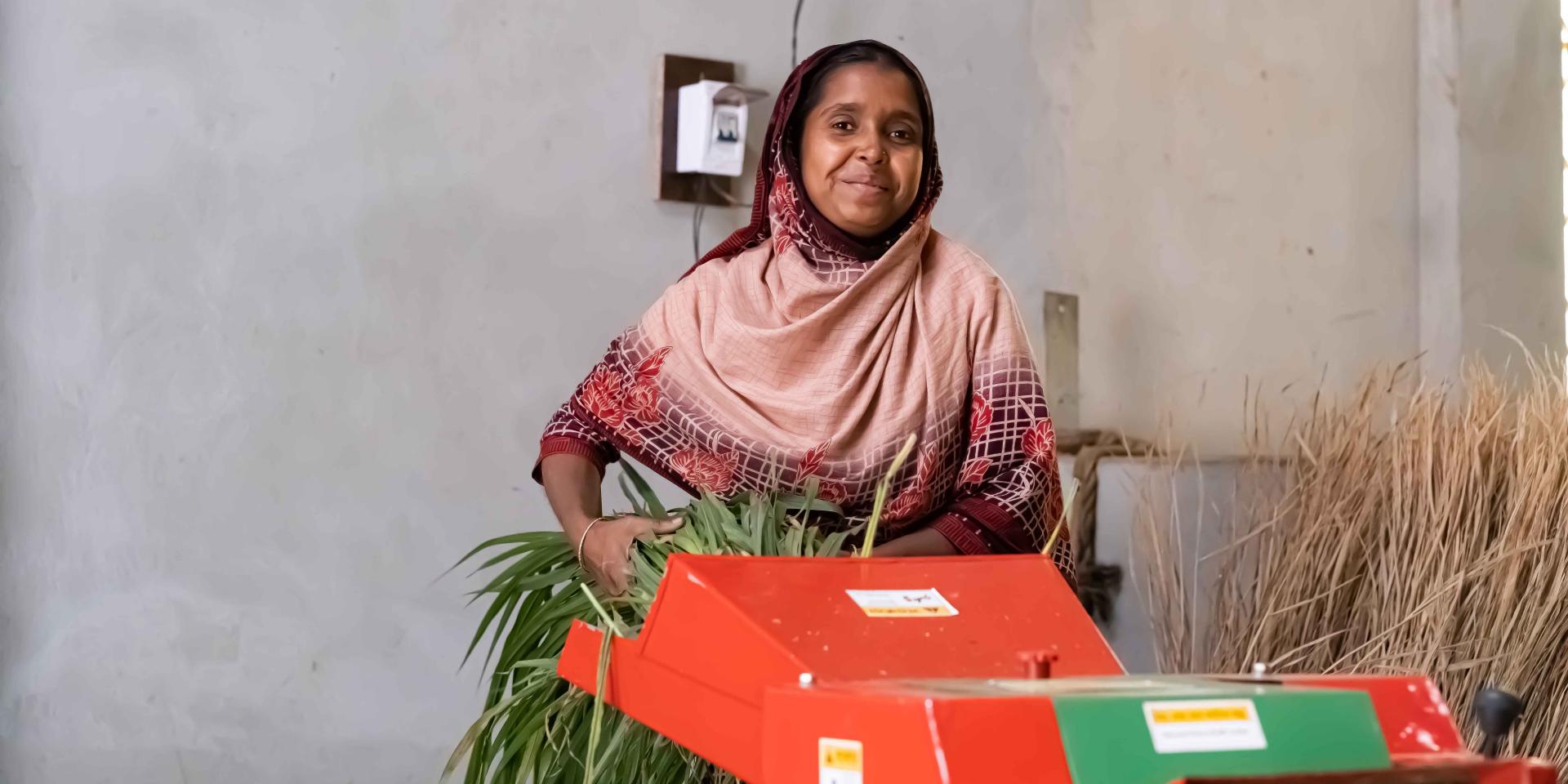
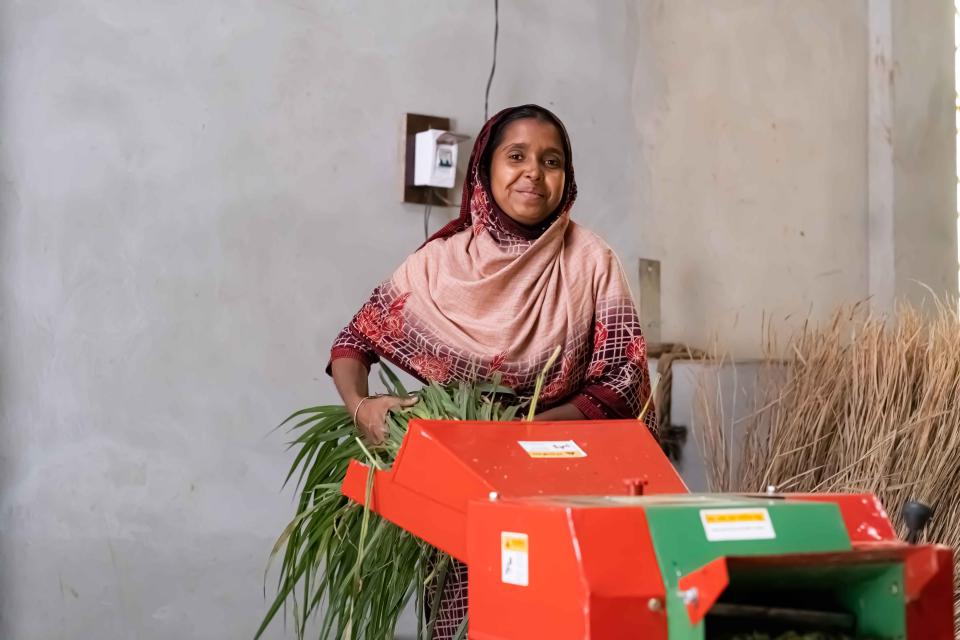
Photo: Mahajabin Khan.
Between August and November 2023, the CGIAR GENDER Impact Platform is running an 8-module training course for science communicators on how to prepare and publish stories on agricultural solutions that work for women. Apply by July 31, 2023.
Positive stories that incorporate women’s voices are few and far between in development discussions and media coverage on women's roles in agri-food systems.
Evidence shows that it is paramount for researchers to consider women’s specific needs, preferences and realities when they develop agricultural solutions such as new seeds and crop varieties, machinery, information services and more. But, we see too few compelling and convincing stories about the benefits that women and communities experience when agricultural innovations are gender responsive.
We’re inviting science communicators from CGIAR and partners—especially those based in South and Southeast Asia—to help us close that gap.
What will the training entail?
- 8-week training course on how to prepare and publish stories. Training will take place virtually as well as in-person during the 2023 CGIAR GENDER conference, From research to impact: Toward just and resilient agri-food systems, which takes place in New Delhi, India, October 9-12, 2023.
- 4-day in-person blogging boot camp during the 2023 CGIAR GENDER conference, during which trainees will be supported to develop and publish blog posts highlighting the gender and social sciences research featured at the conference by CGIAR and its partner organizations.
What’s the training curriculum?
The virtual and face-to-face modules relate to the following topics, and will be tailored to participants’ needs throughout:
| Module 1 | 8/24 | Virtual | Understanding and identifying gender-responsive solutions, including a panel of gender scientists discussing what ‘gender responsive’ really means |
| Module 2 | 8/31 | Virtual | Finding story ideas and publication outlets, including a panel of science journalism editors discussing what both editors and readers look for in a good story |
| Module 3 | 9/7 | Virtual | Interviewing and researching your story |
| Module 4 | 9/14 | Virtual | Taking publishable photos and videos |
| Module 5 | 10/5 | Virtual | Drafting your story, and loading it onto the private training course blog site with photos |
| Module 6 | 10/9 | In-person |
Pitching your story to editors, including a panel of science journalism editors providing advice and feedback to pitches |
| Module 7 | 10/10-12 | In-person |
Editing and crafting the language of your stories |
| Module 8 | 11/2 | Virtual |
Sharing your pitching and publishing successes, showcasing participants’ stories |
What is expected from participants?
- Dedicate 4 hours a week between 8/24 and 11/2 to attend virtual training sessions, complete exercises before the next session, and draft and pitch one news or feature story for publication in a local, national or international media outlet.
- Plan and complete 1 local field trip to gather information, interview farmers and other stakeholders, take photos or video between 9/14-10/5.
- Attend in-person training modules and take part in a ‘blogging boot camp’ during 2023 GENDER conference in New Delhi, and write at least one blog about the conference that will be published by their organization and/or the GENDER Impact Platform.
- Participants’ organizations are required to cover travel, accommodation and other costs for in-person participation in the 2023 GENDER conference in New Delhi.
What support is provided?
- 8-week training course and 4-day blogging boot camp free of charge, including ongoing feedback, editing and mentoring support between modules (via email, Zoom and calls) and during the Delhi conference. We also provide a private blog site where participants can practice writing their stories, and get feedback from the presenters and fellow participants.
- Each participant can access a small travel stipend (up to USD700) for domestic/local travel in support of a local field trip.
- Full 2023 GENDER conference attendance and registration free of charge.
Who will train the participants?
The training modules will be prepared and presented by internationally recognized science communicators from Econnect Communication. Econnect has been running science communication workshops for more than 30 years. They will also involve leading local journalists and editors to provide advice and feedback.
Who can join?
We are inviting science communicators from CGIAR’s centers and their partners who:
- can dedicate minimum four hours a week between August 24 and October 5, 2023, to
- attend the online training modules held weekly on Thursdays (at a time that best suits participants from South and Southeast Asia), starting on August 24, 2023
- undertake a local field trip to conduct interviews and collect photos/video
- produce stories
- can participate in the 2023 GENDER conference in New Delhi, October 9-12, 2023, and cover (through their organizations) their own travel, accommodation and other associated costs
- have close access to women and men smallholders who benefit from gender-responsive agricultural solutions to facilitate a local field trip
- are early to mid-career communicators, with some existing skills in writing and photo or videography
Due to the 2023 GENDER conference taking place in Asia, and to facilitate training sessions across time zones, this round of training is best suited for participants based in South or Southeast Asia.
How to apply?
To apply, please complete this form by Monday, July 31, 2023.
Applications will be assessed by members of Econnect Communication and the CGIAR GENDER Impact Platform to select participants meeting the requirements above and to ensure a wide representation across CGIAR centers, partners and geographies (with a focus on South and Southeast Asia). Note that a limited number of spots is available.
Important dates
| July 31 | Deadline to apply for training and blogging boot camp. |
| August 9 | Selected participants are notified. |
| August 24 | First virtual training module, happening weekly until September 9. |
| September 14 – October 5 | Break for field trips: participants will be expected to conduct interviews, shoot video and photos for their stories (preferably on location in the field). |
| September 30 | Deadline for conference registration (free of charge for trainees). |
| October 9–12 | Attend Delhi conference, in-person training and blogging boot camp. |
| November 2 | Participate in final online session. |
Questions?
Please contact Marianne Gadeberg, Strategic Communications and Content, CGIAR GENDER Impact Platform: m.gadeberg[at]cgiar.org.
What did past participants say?
“I liked the guidelines on how to produce stories on gender-responsive technologies, the use of different formats and also the guidance and realization that I can pitch to many publishing outlets.”
“For me the gender-responsive technology was an approach I had not delved into, and I have gotten so many insights from this training. I will definitely explore this in my future stories.”
“I will take into account the gender biases in hindsight when writing, limiting the stereotypes.”
“I will tell stories differently by structuring them better, knowing what should come first that will interest readers and also editors.”
Stories from past GENDER story training