Van Koppen, B. 2002. A gender performance indicator for irrigation: concepts, tools and applications. Colombo, Sri Lanka: International Water Management Institute (IWMI). 42p. (IWMI Research Report 059) doi: http://dx.doi.org/10.3910/2009.064
Kawarazuka, N.; Damtew, E.; Mayanja, S.; Okonya, J.S.; Rietveld, A.M.; Slavchevska, V.; Teeken; B. (2020). Considering gender in pest and disease management: FAQs for gender-responsive data collection and extension work. Lima, Peru: International Potato Center. 4p.
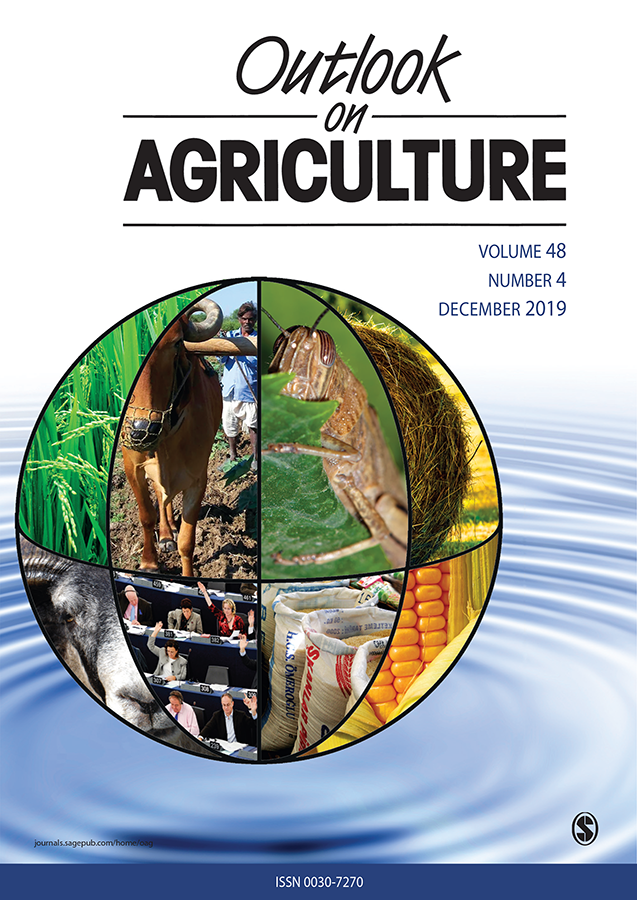
Tavenner, K. and Crane, T.A. 2019. Beyond “women and youth”: Applying intersectionality in agricultural research for development. Outlook on Agriculture 48(4): 316–325
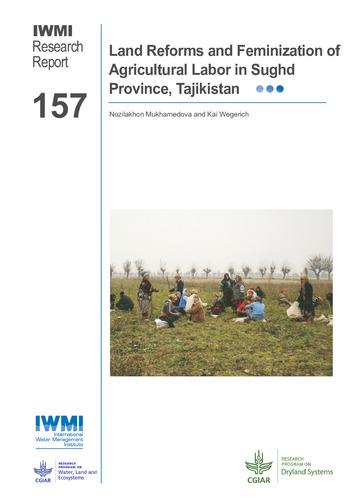
Mukhamedova, Nozilakhon [IWMI]; Wegerich, Kai [IWMI]; 2014. Land reforms and feminization of agricultural labor in Sughd province, Tajikistan. Colombo, Sri Lanka: International Water Management Institute (IWMI). 37p. (IWMI Research Report 157) https://doi.org/10.5337/2014.208
Center for International Forestry Research (CIFOR). 2017. Equal opportunities, gender, justice and tenure CIFOR Factsheet Bogor, Indonesia: Center for International Forestry Research (CIFOR).
Leisher, C., Booker, F., Agarwal, B., Day, M., Matthews, E., Prosnitz, D., Roe, D., Russell, D., Samberg, L., Sunderland, T.C.H., Temsah, G., Wilkie, D. 2017. A preliminary theory of change detailing how women's participation can improve the management of local forests and fisheries. https://doi.org/10.31235/osf.io/rgakw
FAO (2017). Womens empowerment in aquaculture in Bangladesh and Indonesia: Insights from four case studies. Food and Agriculture Organization of the United Nation. Rome. 4 pp
Petesch, P.; Badstue, L.; Prain, G.; Elias, M.; Tegbaru, A. (2017) Entry points for enabling gender equality in agricultural and environmental innovation. GENNOVATE resources for scientists and research teams. CDMX, Mexico: CIMMYT, 10 p.
Cole, S.M. et al. (2016). A social and gender analysis of Northern Province, Zambia: Qualitative evidence that supports the use of a gender transformative approach. Dublin, Ireland: Self Help Africa and Lusaka, Zambia: WorldFish
Schwarz, A. et al. (2014). Engaging women and men in community-based resource management processes in Solomon Islands. CGIAR Research Program on Aquatic Agricultural Systems. Penang, Malaysian. Case Study: AAS-2014-33
Stoian, D.; Meldrum, G.; Lamers, H.; Blare, T.; Elias, M.; Donovan, J. (2018). Exploring a gender-responsive asset-based approach to enhance the transformative potential of value chain development in Guatemala, India and Peru 8 p.
Jodie Colgan, Cynthia McDougall, Md. Emdad Hossain, Una Murray, Charles Spillane, Peter McKeown. (23/12/2019). Can climate-smart aquaculture enable women's empowerment in rural Bangladesh. Bayan Lepas, Malaysia: WorldFish (WF)
Johnson Nancy et al., 'How do agricultural development projects empower women? Linking strategies with expected outcomes', Journal of Gender, Agriculture and Food Security 3, IFPRI, 2018
Rubin, Deborah, 'Qualitative methods for gender research in agricultural development', International Food Policy Research Institute (IFPRI), Washington, D.C., 2016
Onyango Leah et al., 'Coping with history and hydrology How Kenya's settlement and land tenure patterns shape contemporary water rights and gender relations in water', In Community-based water law and water resource management reform in developing countries, ed. B. C. P. van Koppen, Mark Giordano, and John Butterworth. Chapter 11. Pp. 173-195, IFPRI, 2007