Engendering Data Blog Post
Engendering Data Blog Post
Building better metrics for climate resilience and women’s empowerment
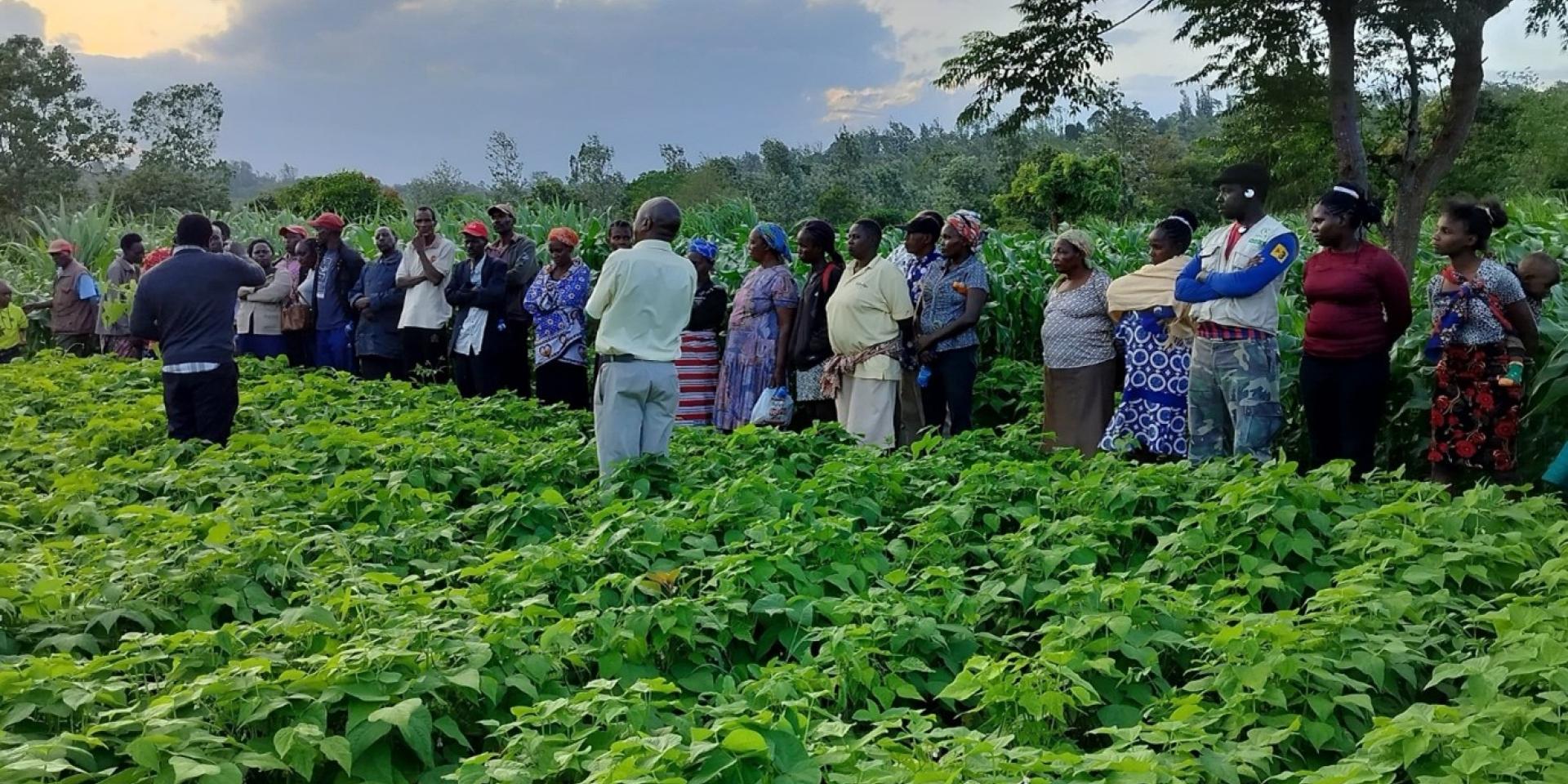
Climate change resilience refers to the capacity to anticipate, absorb, cope with, adapt to, and transform systems in response to climate-related risks. The CGIAR Gender Equality Initiative has been developing a number of tools to help measure women’s resilience capacities in agri-food systems and assess the impact of socio-technical innovation bundles on both resilience and empowerment, and explore the intersection between these two domains.
Increasing climate resilience lies at the heart of agri-food systems transformation in the global South where agriculture remains highly vulnerable to the negative impacts of climate change. Identifying sustainable and equitable adaptation strategies within agrifood system is the aim of research under the CGIAR Gender Equality Initiative, also known as Harnessing Equality for Resilience in the Agrifood System (HER+), in Africa and Asia.
Over the last three years, HER+ has piloted bundled innovations aimed at enabling women to be drivers of, and partners in, building climate resilience in selected sites in Kenya and Ethiopia. In collaboration with the CGIAR GENDER Impact Platform, we developed a diagnostic tool the – Women’s Climate Change Resilience Index (WCRI) – to assess men’s and women’s resilience capacities. The tool was piloted in Ethiopia and Kenya and measures access to productive resources, decision-making power and resilience capacities. We also employed the Project-level Women’s Empowerment in Agriculture Index (Pro-WEAI) tool to analyse the relationship between individual’s resilience and empowerment in Ethiopia.
Baseline findings from Kenya and the role of socio-technical innovation bundles in climate resilience
In Kenya, HER+ implemented socio-technical innovation bundles (STIBs), which integrate climate-resilient agricultural practices in maize- and legume-based production systems. These bundles include social and institutional innovations, such as the Gender Action Learning Systems (GALS) and gender-responsive nutrition training, to promote women’s leadership and participation in decision-making about adopting climate-smart practices in farmers’ fields.
Our baseline study in Kenya collected data from intervention and comparison groups within the CGIAR Diversification in East and Southern Africa initiative’s on-farm demonstrations in Nakuru, Makueni and Embu counties. Farmers’ anticipatory, absorptive, adaptive and transformative resilience capacities were measured. Each capacity was assessed using ten indicators reflecting risk anticipation, shock absorption, behavioural adaptation, and systemic transformation.
Our study results showed that STIBs adopters exhibited resilience capacities nearly 1.5 times greater than those of non-adopters, with women adopters reporting higher capacities than men non-adopters. STIB users reported higher productivity under prolonged droughts conditions. This higher productivity was strongly associated with application of good agricultural practices and collaborative decision-making.
During a national scaling workshop, demand and scaling partners called for common metrics to measure and track STIBs integration into policy and programming. These metrics are being consolidated into a toolkit we are developing to promote, pilot and evaluate the effects of STIBs on empowerment and resilience capacities, and the association between the two domains.
From baseline insights to tool development
Inspired by both results and feedback from partners, we started to develop the WCRI to assess women’s climate resilience and empowerment within our study sites and beyond. WCRI draws on indicators previously applied in Kenya and tool is guided by the framework for measuring and tracking the climate resilience of women in agrifood systems, which defines resilience as capacity to anticipate, absorb, cope with, adapt to, and transform systems. To ground the tool in best practices, we reviewed related frameworks and tools, such as the sustainable livelihoods framework, Farmers and Pastoralists (SHARP and SHARP+), Pro-WEAI, TANGO resilience model, and other development organizations’ resilience frameworks.
WCRI was then piloted in the HER+ study sites in Ejere and Welmera woredas in Ethiopia, where we are leveraging private-sector capabilities for agricultural development, led by World Vegetable Centre, Green Agro Solutions and SNV to integrate social innovations such as financial, gender-sensitive nutrition training, market, and agro-weather information in vegetable value chains.
Key dimensions of the women’s climate change resilience index
The WCRI is a multi-dimensional assessment instrument designed to assess individual resilience capacities in agri-food systems, particularly women. It incorporates resilience modules within the standard pro-WEAI core modules to explicitly link women’s empowerment and resilience. The key dimensions included in this index are:
- Access to productive capital and assets: Secure access to land and assets is critical for climate-adaptation. We collected detailed records of land use and ownership type (owned, rented or borrowed) and farm size, which can significantly impact resilience strategies. We also captured who within the household makes or would make decisions to sell land and other assets in response to climate change.
- Group membership and climate-related participation: Social groups are powerful mechanisms that provide emotional support, shared knowledge and resources during climate change-related events. Women can leverage collective groups to bolster individual and household resilience. We add two additional questions to the Pro-WEAI module on group membership: “Does this group focus on climate-related activities?” and “To what extent do you participate in climate-related activities of the group?” These additions are important for understanding the effectiveness of social groups in contributing to women’s resilience capacities.
- Resilience capacities: Building on the Kenya experience, we included subjective metrics to measure anticipatory, absorptive, adaptive, and transformative resilience capacities. We included questions on social norms and perceptions around climate adaptation and resilience. For example, we asked how important farmers found it to see a practice being implemented on another farm before making the decision to use climate-smart practices and how other people’s perceptions influence sources of climate information and climate-smart practices. The tool also measured individual confidence and preparedness, which are critical to building resilience against adverse climate change events.
- Exposure to shocks and stressors: Questions about context-specific climate-related shocks and stressors were added to measure exposure to climate change related events. The questions asked farmers to report extreme climate events experienced in the last five years, the frequency and severity of the events, anticipative measures taken before the event, and farmers’ engagement in community-level climate initiatives and governance. We collected data on strategies to cope with and recover from shocks. In addition, information on crop and income loss related to multiple stress shocks and stressors was collected.
- Local governance: Participating in local governance provides a forum for individuals to influence the actions and measures taken to strengthen climate resilience at the community scale. Some questions were incorporated to measure women’s leadership and participation in climate adaptation efforts at the community level.
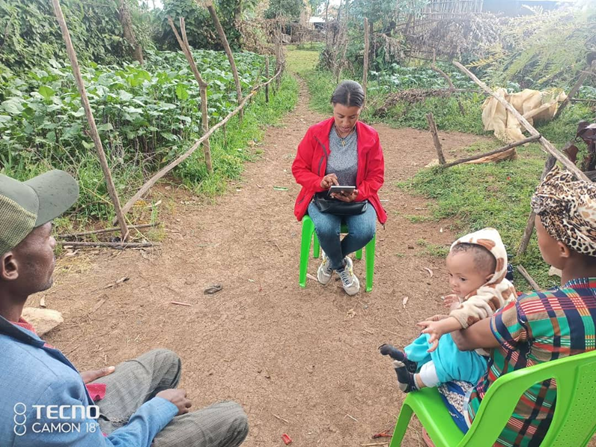
Data collection in the field. Photo: Dessalegn Keteme
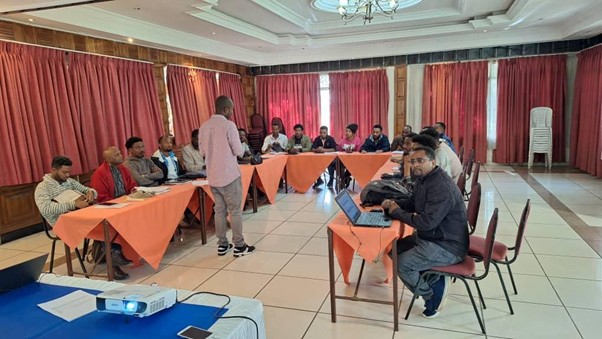
Enumerators receiving training in Holeta, Ethiopia, to pilot the Women’s Climate Change Resilience Index as part of the HER+ study. Photo: Dessalegn Keteme
Refining the tool and looking ahead
The research team plans to refine the WCRI using data collected from over 1,600 women and men farmers in Ethiopia. Insights from piloting the tool have contributed to a forthcoming WEAI brief, synthesizing lessons across climate-focused studies in multiple countries and is expected to support development of a climate add-on module for Pro-WEAI. Once finalized, this tool will support tracking changes in women’s empowerment and climate resilience. WCRI will also inform a broader toolkit for STIBs and strengthen gender-responsive resilience metrics in agri-food systems in the global south.
Related content
Engendering Data Blog Post