Community conversations: a community-based approach to transform gender relations and reduce zoonotic disease risks
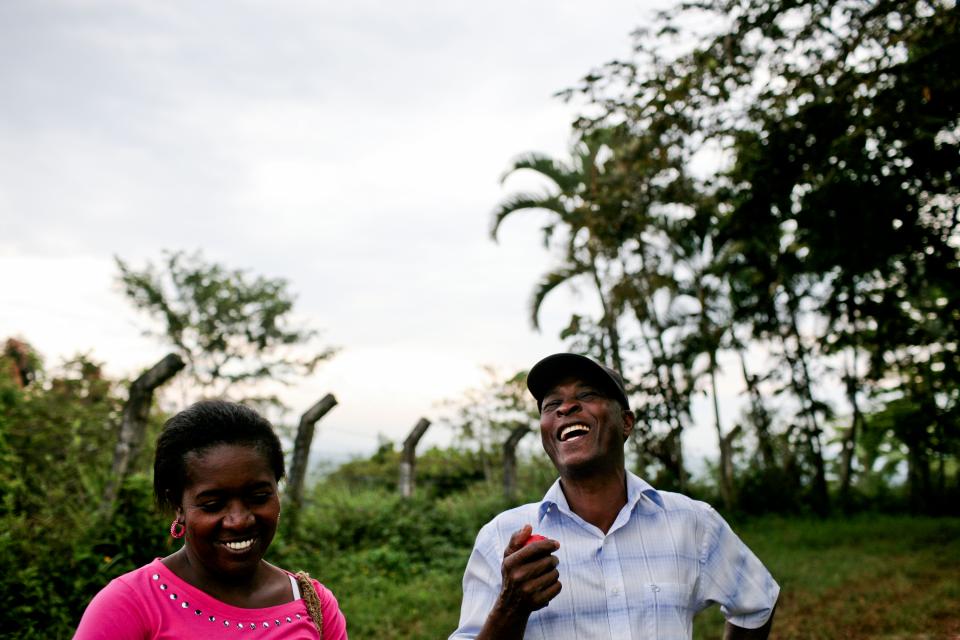
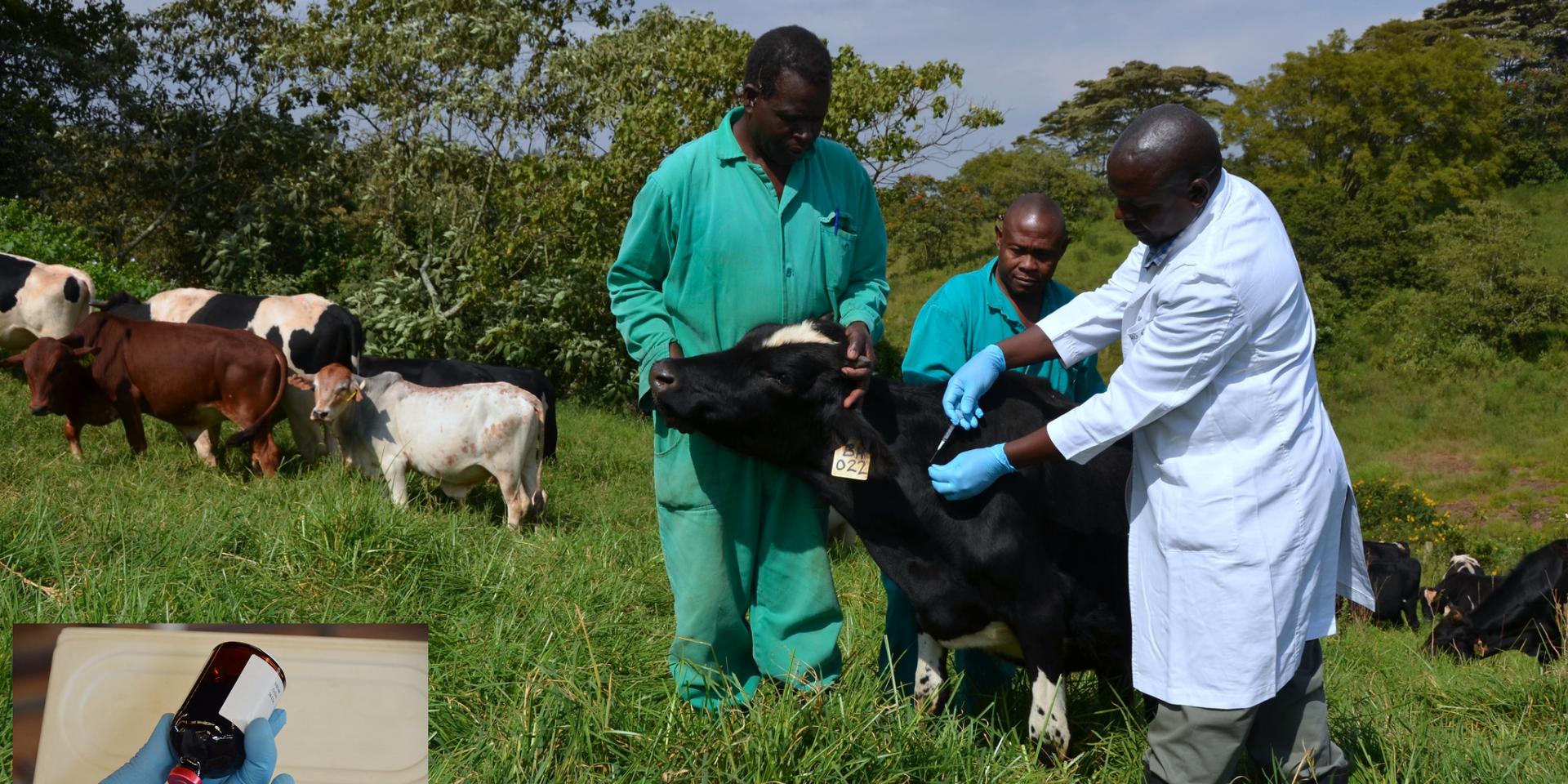 Photo: Paul Karaimu/ILRI
Using facilitated community conversation forums to collectively own and transform gender relations in livestock diseases and management.
Why is this method important?
Improving small livestock management and reducing the impacts of animal diseases requires engaging both women and men, who hold different roles in owning and managing livestock.
A research report about gender relations in small ruminant production identified gaps in our knowledge, attitude and practice in gender roles in livestock, women’s livestock ownership and zoonotic diseases.
When both women and men are engaged in the process, communities can bring about changes in discriminatory gender norms, attitudes, behaviors and power imbalances, creating positive changes related to gender equality and women’s empowerment.
Who is the method for?
People who could benefit from this method include facilitators, epidemiologists, local partners, community groups and researchers committed to transforming gender relations in managing livestock.
How can I use the method?
After identifying knowledge, attitude and practice needs, researcher teams created a community-based transformative approach called “community conversations”.
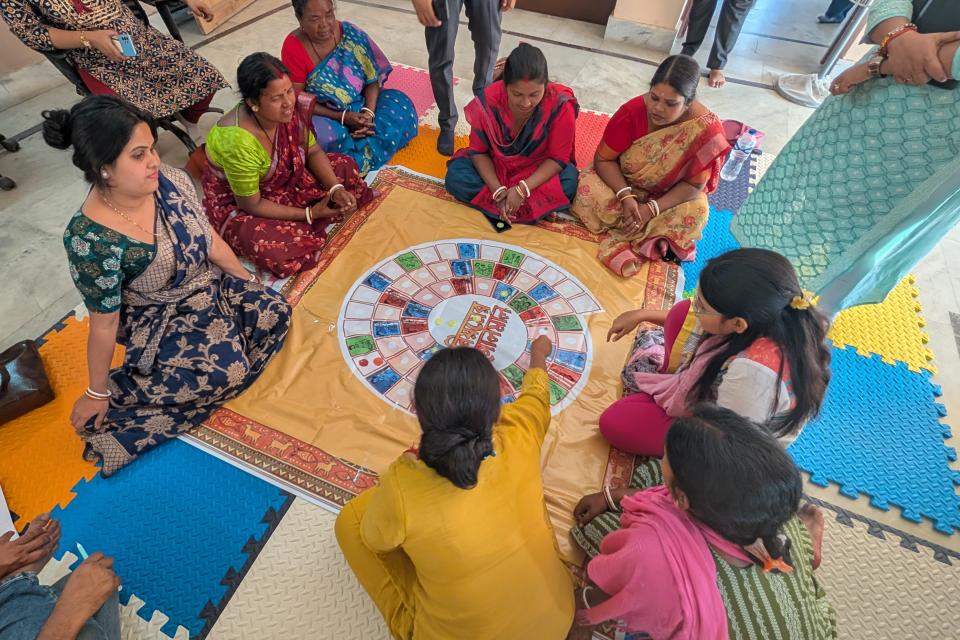
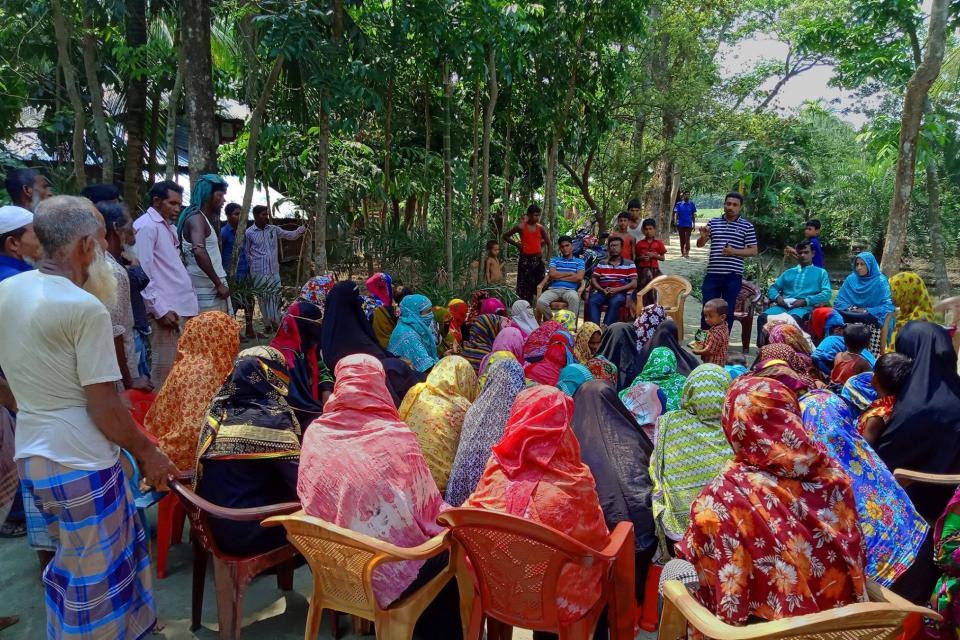
Community groups work with trained facilitators in forums to identify their strengths and constraints, analyze community values and practices, and explore strategies for addressing challenges that prevent women from fully taking part in livestock production.
The forums:
- enable people to discuss issues away from formal social environments, opening space for new ways of thinking and questioning.
- are based on the recognition that people have the knowledge and capability that can bring about positive development outcomes individually and collectively.
- can lead to the evolvement of collective ideas and a critical consciousness, which can contribute to changes in restrictive gender norms and livestock management practices.
- engage a wide variety of stakeholders.
The forums were created after a review of participatory methods and tools.
This guide:
- gives the methodological background
- outlines the steps for organizing, facilitating and documenting community conversations
- expands on four outcomes achieved through the method
- suggests challenges, lessons and considerations for scaling community conversations to groups of different sizes.
Using this approach allows participants to engage fully in the conversations. This leads to everyone involved being included in decision-making about gender and livestock management, which presents them with opportunities for sustained change.
When and how was it developed?
International Livestock Research Institute (ILRI) developed this method in 2019.
Where can I get the method? Who can I contact?
The method report is available online [PDF, 1.5MB]. Contact Mamusha Lemma for more information at ILRI-Kenya@cgiar.org.
Tools, methods, manuals
Publications
Community conversations: A community-based approach to transform gender relations and reduce zoonotic disease risks
Transforming gender relations and reducing risk of zoonotic diseases among small ruminant farmers in the highlands of Ethiopia: A guide for community conversation facilitators
Practical strategies for enhancing gender equality and social inclusion in Innovation Platforms: Examples from agriculture and natural resource management
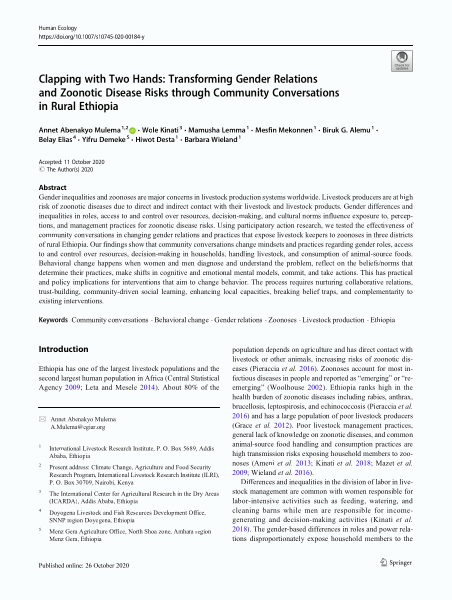
Clapping with two hands: Transforming gender relations and zoonotic disease risks through community conversations in rural Ethiopia