Top 10 reads on gender and ecological knowledge
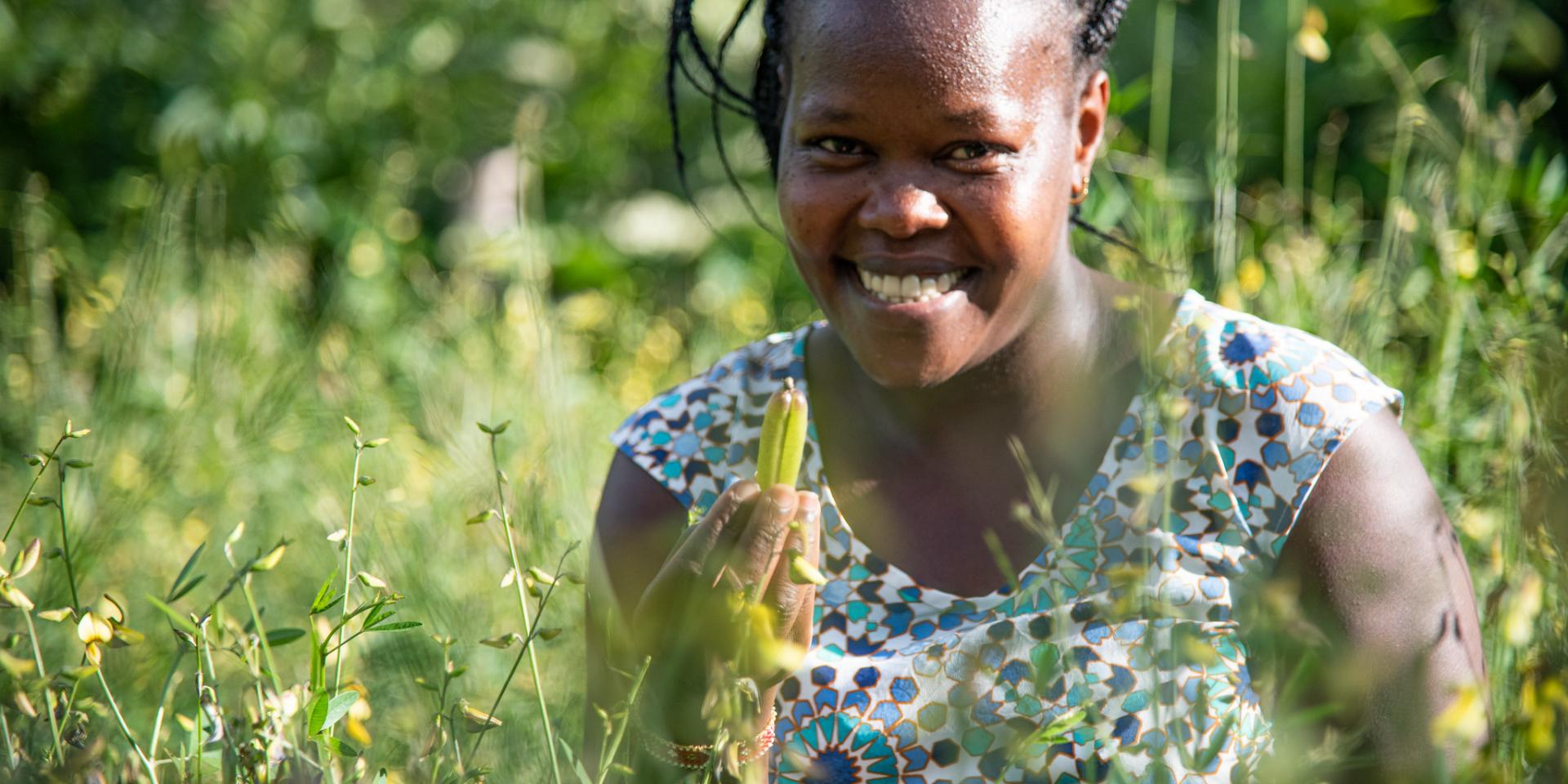 Photo: Georgina Smith/CIAT.
A series of recommended reading lists provide starting points for researchers, students, practitioners and others looking to dive deeper into research on gender and a wide variety of topics.
In this list, we take a closer look at recommended reading on gender and ecological knowledge. Previous reading lists are available on gender and value chains and gender and nutrition.
Ecological knowledge are the understandings, beliefs and practices that local and Indigenous societies develop in relationship with their natural environment. Integrating communities and their ecological knowledge into decisions on land use and rural development is increasingly viewed as important, both for identifying problems and for coming up with sustainable solutions. These ten reads provide a snapshot of some conceptual, methodological and empirical contributions to demonstrate why the gender lens on ecological knowledge matters.
How do we know what gendered differences in ecological knowledge exist?
Let me start with two methodological contributions, the first for focus groups and the second for surveys:
#1
This study from East Africa developed a multidimensional analysis for focus group discussions to understand male and female perceptions of the contributions of ecosystem services to well-being (Fortnam et al., 2019). The results revealed gendered differences in incomes, labor roles and uses, and access to ecosystem goods or services. For example, women valued a wider range of ecosystem services than men, but they also scored the values of their benefits comparatively lower. Part of this depended on how (own and cultural) expectations on women or men determined their access to or engagement in income-generating activities. The authors pointed to the role that local institutions can play in ensuring equal access to benefits and in changing perceptions.
#2
Using the Shadetreeadvice.org tool, practitioners could support farmers to individually score their preferences for trees and ecosystem services in relation to coffee agroforestry. This study, conducted in relatively cohesive Indigenous communities in northwestern Vietnam, showed that women and men had fairly similar preferences for tree species in agroforestry systems (Nguyen et al., 2020). However, men were more verbal than women in describing their preferences, something also reflected in an on average higher score. Capturing this requires qualitative and quantitative tools. The ecological knowledge for both women and men reflected the trees they had most experience with, and when their ecological knowledge was vague, expectations of economic benefits tended to take over the prioritization.
Both study #1 and #2 show that men tend to give higher average scores to ecosystem services benefits than women, which would mean that, if grouped together, women’s relative contributions may be less distinguishable. Tools facilitating group or individual scoring that provide qualitative information to back up quantitative scores can provide insights into gaps that needs to be addressed.
How do women and men attain ecological knowledge?
#3
Many studies show that women and men have different knowledge, but why? Some scholars suggest that vertical learning (from parents to children) may be less gendered than horizontal (such as learning from peers), but also that the role of vertical knowledge is exaggerated. Da Costa et al. (2021) studied how ethnobotanical knowledge is understood and shared in southeastern Brazil. Similar to statistical ecological network analyses, they illustrated gendered knowledge based on the number of species, spread of knowledge within the group of women and men, and their respective social-ecological networks. This study showed that women recognized more species than men (because?) they shared what they know and had strong cohesive networks. However, such generalizations are not globally applicable.
#4
Quinlan et al. (2016) studied how Mexican children learn about ethnobotany. They found that vertical learning was gendered; however, relatives and siblings were more important for acquiring knowledge than parents. Unsurprisingly, children first learned to identify trees and staple crops, and added other plant domains as they grew older. Interestingly, the birth order mattered, the firstborns tended to have greater overall ethnobotanical knowledge. In this case, in the male sphere, boys retained more knowledge about trees, while in the female sphere, girls learned and retained more knowledge about medicinal plants.
Should we be concerned about gendered loss of ecological knowledge?
Study #4 above reminds us that knowledge is not static, but accumulated and passed on over a lifetime – and its value lies in how it contributes to the community as a whole (in the form of ecoliteracy), rather than at a certain age or to a gender group. Just as we live in the most enlightened times with information a click away, biodiversity is lost by the day, local ecological knowledge is impoverished, which some believe will further drive a spiraling biodiversity loss. Some scholars argue that the loss of the knowledge base should be a concern as we distance ourselves from our interactions with nature.
#5
Pilgrim et al. (2007) compared resource-dependent communities in India and Indonesia with non-resource–dependent communities in the United Kingdom. Like studies #3 and #4, the highest levels of ecoliteracy were found among those grew up in rural areas and acquired informal knowledge through social interaction (as opposed to media and school). In the two resource-dependent communities, the highest levels of ecoliteracy were found among the poorest households, who depended on nature for their livelihoods. While knowledge may be similar, such as knowing names of species, gendered expertise was related to roles. For example, among poorer Indian households who could not afford pharmaceuticals, women generated, as the primary care takers, an expertise in plants to treat common ailments and diseases.
#6
Women’s and men’s knowledge matters in all sorts of rural development and agricultural transition, and by voicing only one side, we risk missing and losing knowledge. Gendered loss of ecological knowledge can be a side effect of agricultural mechanization because men tend to benefit more from technology development than women. The review by Rola-Rubzen et al. (2020) showcases a wide range of gender gaps to look out for and provides actionable directions to some entry points in an Asian context. A recurring theme of inquiry is whether new technologies contribute to gender equity or cement or increase inequalities in ecological knowledge.
#7
A comprehensive statistical analysis by Aswani et al. (2018) of 92 papers published on various types of local ecological knowledge showed that 75% of the studies included gender-differentiated knowledge – and from a gender equality perspective this gave inconclusive results: one-third showed no differences between the genders, while about 20% each found men or women more knowledgeable. More importantly, the authors tried to address changes or loss in local ecological knowledge. They elaborated that women overall were more likely to be affected by changes in local ecological knowledge than men, but noted regional differences: the changes affected men more in South America and women more in Asia. Loss of medical knowledge was most severe—something which could affect women more (see #4, #5). Loss was driven by market integration (in the European Union) and commercialization (in developing countries) and associated with masculinization and mechanization of agriculture.
#8
However, Mikołajczak et al. (2021) contested that loss of knowledge automatically means loss of care for nature. Their study of nature connection and ecological knowledge in Amazonian deforestation frontiers showed that men recognized more birds than women did, but their knowledge was not explained by their contact with or dependence of nature. Like many others, the authors stress the importance of understanding the context.
What are the wider applications of local ecological knowledge?
These last two papers demonstrate that we cannot predict when ecological knowledge will be useful, in some cases not until it is too late.
#9
First, in translating Indigenous knowledge to adaptation to future risks, a special issue in Ambio brought up eleven examples of local, gendered and generational (vertical) ecological knowledge for adapting to environmental change. As a summary, the introductory chapter (Ravera et al., 2016) frames the importance of interdisciplinarity gender studies for addressing our urgent challenges across the socioecological system.
#10
And then came the pandemic… the perfect storm where all our knowledge, skills and adaptive capacities would be tested. Many “COVID papers” illustrated new complexity of gender as farmers’ links to and from markets were interrupted. Local ecological knowledge became a survival skill for more groups in sourcing for food and more circular farming practices. With fieldwork from Algeria, Morocco and India, Leonardelli et al. (2021) demonstrated how both scientists and farmers quickly had to adapt and how the roles and foci of ethnobotanist researchers also shifted. Then they highlighted new economic and ecological vulnerabilities, with conflating intersectional factors that restricted livelihoods, especially for women farmers. This study captures so well why local ecological knowledge is vital—and that women’s and men’s knowledge is complementary, if treated as such.
Epilogue
Ecological knowledge is highly contentious. Since 2015, an average of four people per week have been killed while defending their land and environmental causes (Correa-Salazar et al., 2021), among them 40% Indigenous people. While nine in ten killed were men, women report sexual violence. In 2020, 228 recorded killings took place, the highest number on record. This top 10 list is dedicated to those women and men who are harassed or have lost their lives defending environment.
References
The Gendered Nature of Ecosystem Services
Fortnam, M., Brown, K., Chaigneau, T., Crona, B., Daw, T.M., Gonçalves, D., Hicks, C., Revmatas, M., Sandbrook, C., Schulte-Herbruggen, B., 2019. The Gendered Nature of Ecosystem Services. Ecological Economics 159, 312-325.
Local Knowledge about Ecosystem Services Provided by Trees in Coffee Agroforestry Practices in Northwest Vietnam
Nguyen, Mai P., Philippe Vaast, Tim Pagella, and Fergus Sinclair. 2020. "Local Knowledge about Ecosystem Services Provided by Trees in Coffee Agroforestry Practices in Northwest Vietnam" Land 9, no. 12: 486. https://doi.org/10.3390/land9120486
Gender differences in traditional knowledge of useful plants in a Brazilian community
da Costa, F.V., Guimaraes, M.F.M., Messias, M., 2021. Gender differences in traditional knowledge of useful plants in a Brazilian community. Plos One 16, 16.
Children’s Acquisition of Ethnobotanical Knowledge in a Caribbean Horticultural Village
Quinlan, M.B., Quinlan, R.J., Council, S.K., Roulette, J.W., 2016. Children's acquisition of ethnobotanical knowledge in a Caribbean horticultural village. J. Ethnobiol. 36, 433-456.
A Cross-Regional Assessment of the Factors Affecting Ecoliteracy: Implications for Policy and Practice
Pilgrim, Sarah, David Smith, and Jules Pretty. “A Cross-Regional Assessment of the Factors Affecting Ecoliteracy: Implications for Policy and Practice.” Ecological Applications 17, no. 6 (2007): 1742–51. http://www.jstor.org/stable/40062071.
Improving Gender Participation in Agricultural Technology Adoption in Asia: From Rhetoric to Practical Action
Rola-Rubzen, M.F., Paris, T., Hawkins, J., Sapkota, B., 2020. Improving Gender Participation in Agricultural Technology Adoption in Asia: From Rhetoric to Practical Action. Applied Economic Perspectives and Policy 42, 113-125.
Global trends of local ecological knowledge and future implications
Aswani, S., Lemahieu, A., Sauer, W., 2018. Global trends of local ecological knowledge and future implications. PLoS ONE 13, e0195440.
Who knows, who cares? Untangling ecological knowledge and nature connection among Amazonian colonist farmers
Mikołajczak, K., Lees, A.C., Barlow, J., Sinclair, F., Trindade de Almeida, O., Souza, A.C., Parry, L., 2021. Who knows, who cares? Untangling ecological knowledge and nature connection among Amazonian colonist farmers. People and Nature 3, 431-445.
Gender perspectives in resilience, vulnerability and adaptation to global environmental change
Ravera, F., Iniesta-Arandia, I., Martín-López, B. et al. Gender perspectives in resilience, vulnerability and adaptation to global environmental change. Ambio 45, 235–247 (2016). https://doi.org/10.1007/s13280-016-0842-1
COVID-19 in Rural India, Algeria, and Morocco: A Feminist Analysis of Small-Scale Farmers' and Agricultural Laborers' Experiences and Inventive Practices
Leonardelli, I., Bossenbroek, L., Ftouhi, H., Kadiri, Z., Bhat, S., Kulkarni, S., Hamamouche, M.F., Saidani, M.A., Zwarteveen, M., Kemerink-Seyoum, J.S., 2021. COVID-19 in Rural India, Algeria, and Morocco: A Feminist Analysis of Small-Scale Farmers' and Agricultural Laborers' Experiences and Inventive Practices. Frontiers in Human Dynamics 3.
Related content